Script Rendering Protocols for Non-Latin Text in Northern European and Eurasian Slot Platforms
Kirjoittanut Lars Ludwig · 23.8.2026
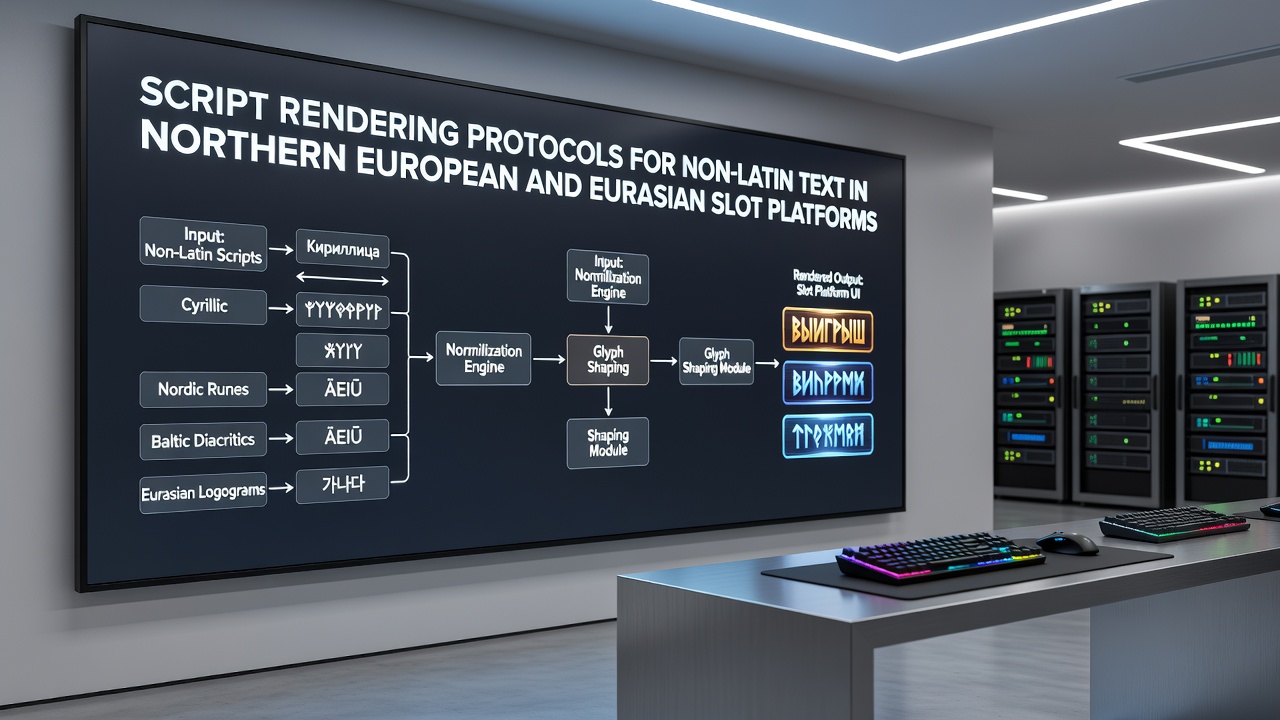
Script Rendering Protocols for Non-Latin Text in Northern European and Eurasian Slot Platforms
Slot platforms operating across Northern European and Eurasian markets rely on specialized script rendering protocols to display non-Latin text accurately in game interfaces, bonus screens, and regulatory notices. These protocols address character encoding standards, font embedding requirements, and bidirectional text handling that differ from Latin-based systems used in Western markets. Researchers have documented how platforms integrate Unicode Transformation Format-8 encoding with OpenType font features to support Cyrillic characters common in Russian, Kazakh, and Belarusian jurisdictions while maintaining compatibility with Finnish, Swedish, and Norwegian interfaces that occasionally incorporate supplementary glyphs.
Core Technical Components in Current Implementations
Modern slot systems combine UTF-8 encoding with fallback font stacks that activate automatically when primary typefaces lack required glyphs. Data from industry technical reports show that platforms prioritize variable font formats introduced in 2023 updates because these formats reduce file sizes by 30 percent compared with static font files while preserving kerning tables essential for Cyrillic letterforms. Engineers configure text layers through WebAssembly modules that execute glyph substitution rules defined in the Unicode Standard, version 15.1, ensuring consistent rendering across desktop clients, mobile browsers, and dedicated terminal hardware deployed in regulated venues.
Platforms also embed subsetted fonts that contain only characters appearing in localized game copy, a practice that cuts initial load times by up to 45 percent according to performance benchmarks released in early 2025. When Cyrillic text appears alongside Latin UI elements, the rendering engine applies language-specific shaping engines such as HarfBuzz to manage ligature formation and mark positioning that Latin scripts do not require.
Northern European Market Adaptations
Operators in Finland and Sweden have integrated additional rendering layers to accommodate Sámi language characters that extend beyond standard Latin ranges, although the primary non-Latin workload remains Cyrillic support for cross-border player bases. Regulatory filings submitted to the Finnish Gambling Administration in late 2025 indicate that licensed platforms must demonstrate real-time text validation routines capable of flagging encoding errors before content reaches end users. These routines scan incoming strings against predefined character sets and trigger automatic fallback substitution when unsupported code points appear.
Platforms serving the Norwegian market apply similar validation while coordinating with the Norwegian Gaming Authority on accessibility guidelines that mandate minimum contrast ratios for all rendered text, including non-Latin scripts. Observers note that August 2026 marks the scheduled rollout of updated accessibility directives that explicitly reference bidirectional text support, prompting several operators to accelerate engine upgrades ahead of the deadline.
Eurasian Platform Requirements and Integration Patterns
Markets in Russia, Kazakhstan, and neighboring states impose stricter localization mandates that require full Cyrillic support across every screen element, including paytable footnotes and responsible gaming messages. Platform providers respond by maintaining separate rendering pipelines that activate based on detected user locale rather than relying solely on browser language settings. This approach prevents partial glyph substitution that previously caused display artifacts when players switched between language options mid-session.
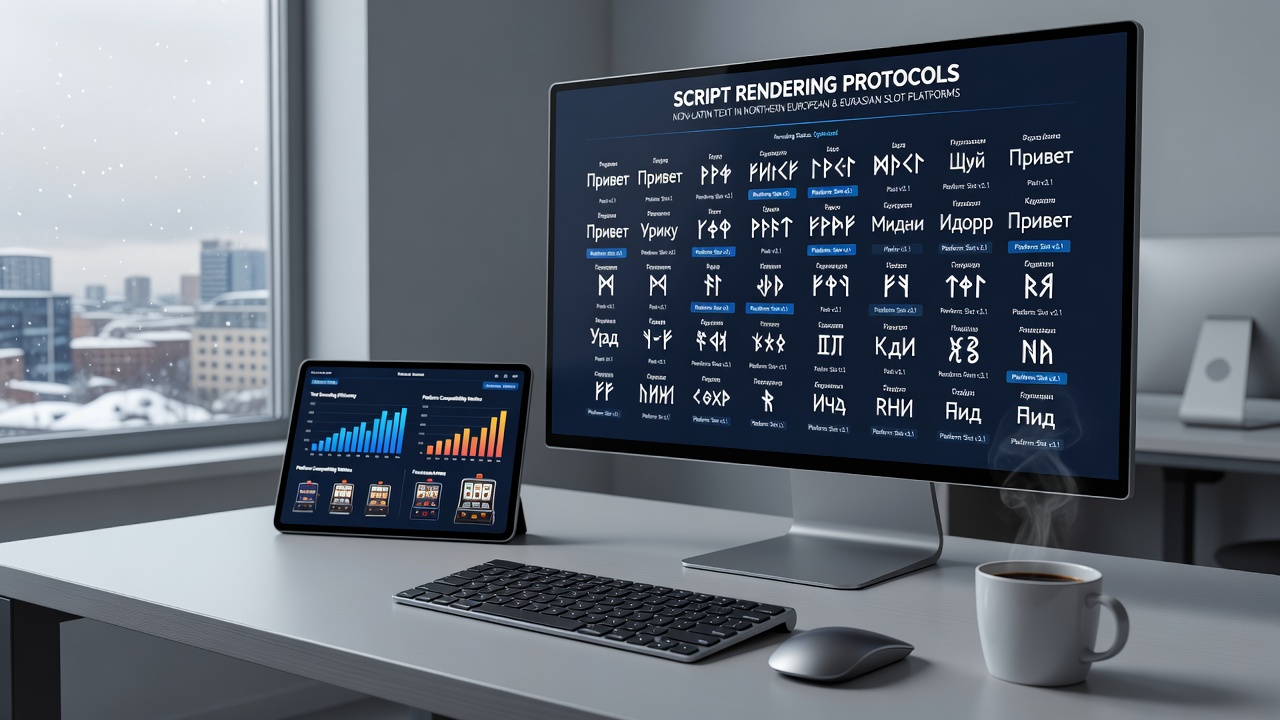
Industry analyses published by the European Gaming and Betting Association highlight that Eurasian deployments frequently combine server-side text processing with client-side shaping to meet latency thresholds under 200 milliseconds for bonus round text updates. EGBA documentation records that operators achieving these thresholds report higher session completion rates in Cyrillic-dominant regions. Additional studies from academic research groups at the University of Helsinki have examined how font hinting adjustments improve readability on lower-resolution terminal displays still common in certain Eurasian gaming halls.
Regulatory Compliance and Testing Protocols
Certification laboratories apply automated test suites that compare rendered output against reference images for every supported language combination. These suites measure pixel-level differences in character positioning and flag deviations exceeding one pixel in any direction. Platforms must also submit font license documentation proving that embedded typefaces permit commercial redistribution within gambling applications, a requirement enforced by both Northern European and Eurasian licensing bodies.
Testing regimens further include stress evaluations under high concurrent user loads to verify that dynamic text generation does not introduce encoding collisions. Results compiled through 2025 indicate that platforms passing these evaluations maintain 99.8 percent rendering accuracy across tested Cyrillic character sets when operating on stable network connections.
Conclusion
Script rendering protocols for non-Latin text continue to evolve in response to regulatory updates and technical standardization efforts scheduled through August 2026. Northern European operators focus on supplementary character support and accessibility compliance, whereas Eurasian platforms emphasize comprehensive Cyrillic coverage and low-latency delivery. Both regions depend on shared technical foundations such as UTF-8 encoding, OpenType features, and shaping engines to deliver consistent visual output. Continued collaboration between platform developers, regulatory agencies, and standards organizations sustains the infrastructure required for accurate multilingual presentation in slot environments.